
Turning the Urban Landscape into Greenspace
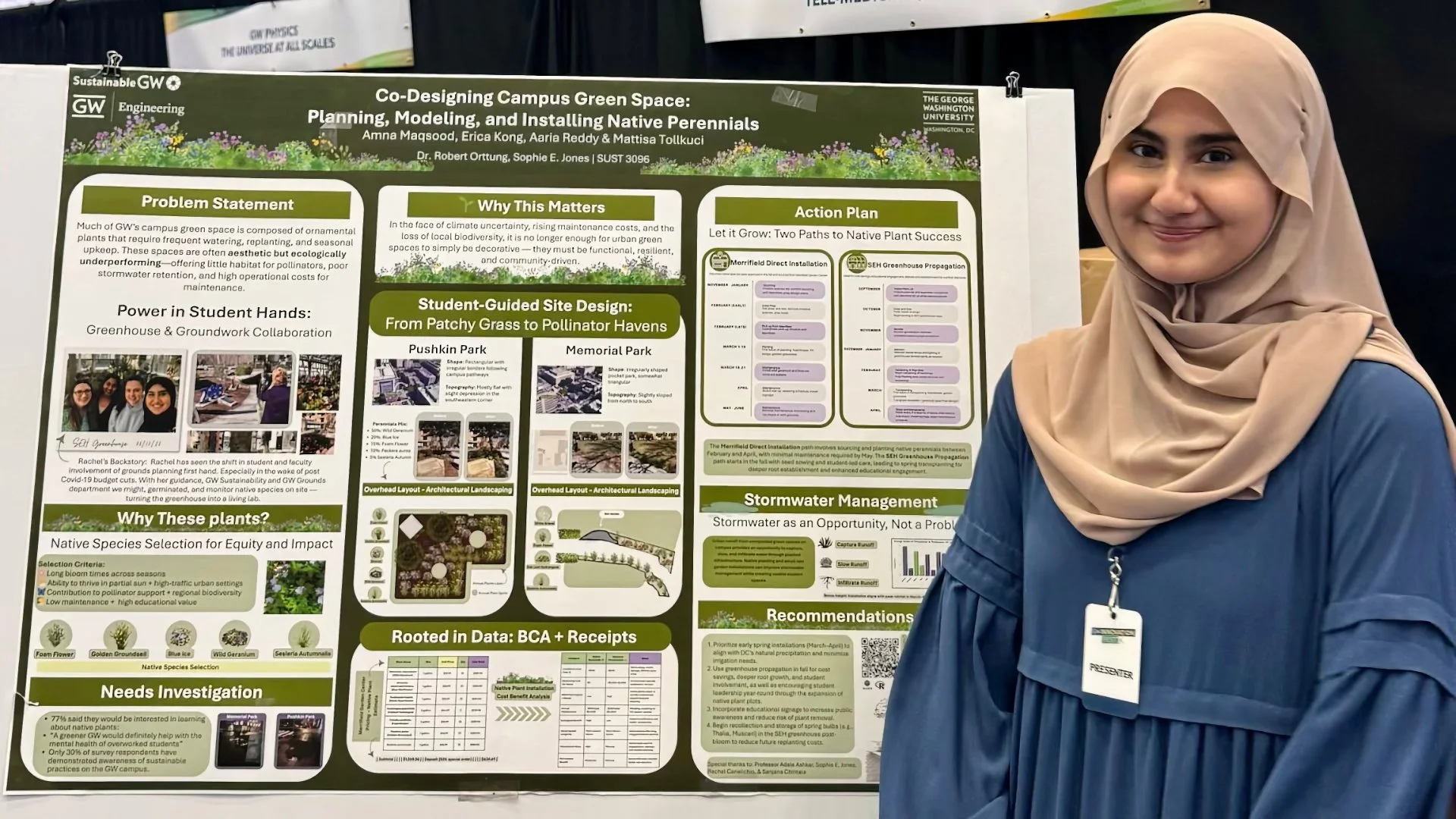
Image via GW Today
On a scorcher of an early summer morning, beneath birds’ insistent chirps, members of a George Washington University grounds crew worked over the mulched mound in Pushkin Park putting in dozens of plants—the perennial foam flowers, golden groundsel, wild geranium, blue mistflower, black-eyed Susan and oakleaf hydrangea—species all native to the area around the District of Columbia that could save the university thousands of dollars.
When rainfall flows off roofs onto walkways and roads in urban areas, there is not much ground soil to soak it up, creating runoff that contributes to pollution and turning into puddles and potential flooding. On rainy days in Foggy Bottom, Amna Maqsood, a rising senior and systems engineering major, often found herself avoiding puddles in the streets to get to the School of Engineering and Applied Science, a not entirely uncommon occurrence in urban spaces such as GW’s Foggy Bottom campus.
“Especially the area around Pushkin Park, there is a giant puddle whenever it rains. It really can be a problem,” she said.